




COMAH Consultancy Services


Independent COMAH Compliance Support
Use my 25-year experience in the COMAH and Major Accident Hazard Industries to guide your establishment to achieve compliance in a way that is simplified, tailored and proportionate to your scale and sector.
Control of Major Accident Hazards Regulations (COMAH 2015)
Process safety legislation in the UK is predominantly enacted through the Control of Major Accident Hazards Regulations (COMAH) . Operators have a duty to take all measures necessary to prevent major accidents and limit the consequences to people and the environment. A COMAH site is one where sufficient quantities of Dangerous Substances are stored to exceed the COMAH threshold to become an Upper Tier site or a Lower Tier site. Closely aligned with COMAH is the Planning (Hazardous Substances) Regulations which require an application to obtain permission to store certain quantities of dangerous substances.
Sites which handle and store dangerous substances therefore need to.
- Establish if COMAH and the Planning (Hazardous Substances) Regulations apply and, if so.
- Apply for hazardous substances consent.
- Provide a COMAH notification to the competent authority.
- Identify their Major Accident Hazard Scenarios.
- Implement a Major Accident Prevention Policy (MAPP) and Safety Management System (SMS) which ensures that risks are assessed and managed appropriately.
- Provide the necessary information to the public.
- Emergency planning.
- For upper tier sites, prepare an off-site emergency plan and a COMAH Safety Report.
Challenges for Major Accident Hazard Sites
Since UK Health and Safety legislation is based upon goal setting, compliance with the COMAH regulations has a strong link with the principal of As Low As Reasonably Practicable (ALARP). This requires a balance to be struck between the time, effort, resource and costs of improvements versus the risk reduction benefits. Typical challenges are.
- Sufficiently competent staff who can confidently discuss the subject to the COMAH regulatory authorities.
- Maintaining organisational competence and corporate memory at all levels of the organisation.
- Balancing resources with COMAH requirements.
- Understanding the language and terminology used by regulatory authorities.
- Deciding when risks are sufficiently reduced.
-bcb7b58.jpg/:/cr=t:0%25,l:0%25,w:100%25,h:100%25/rs=w:1200,cg:true)
COMAH Warehousing
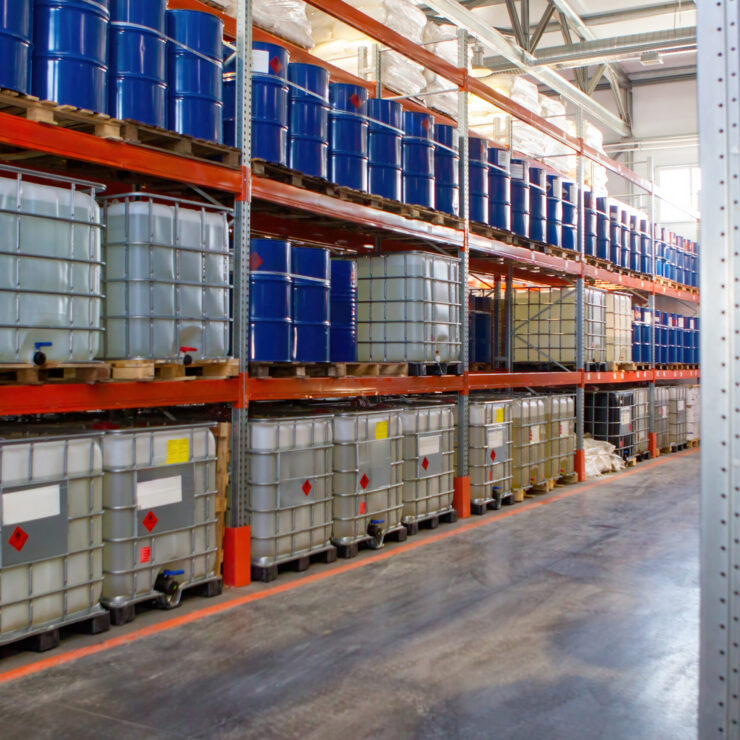
In 2015 changes to the classification of some dangerous substances had an impact upon the warehouse sector through COMAH 2015. Substances which were not previously covered by COMAH now fell into the regulations and pushed many operators above the threshold quantity levels. This, combined with a shift in the U.K from manufacturing to storage, has placed warehouses into the spotlight for the COMAH regulatory authorities. Key focus area for this sector are.
- Environmental impact of a fire and subsequent firewater runoff.
- Requirements for containment of firewater runoff.
- DSEAR related risk analysis and sufficiency of ventilation.
- Reliability of fire protection systems.
New COMAH Site Support
This service is particularly relevant for sites or industries who are new to COMAH or are considering becoming a “COMAH site” and require expert advice on what this means. You might be;
- Developing a new site.
- Increasing inventories.
- Introducing new dangerous substances.
- Reacting to a change in regulatory view of your industry and substances.
We help determine whether your site falls under COMAH, calculate your COMAH status, and explain how COMAH links with the Planning (Hazardous Substances) Regulations.
When you’re ready to progress to COMAH, we support the submission of your COMAH notification, carry out COMAH Gap Analyses, and assist in developing or reviewing your Major Accident Prevention Policy (MAPP) and Safety Management System (SMS). Where required, we facilitate meetings with the Health and Safety Executive (HSE) and Environment Agency (EA), helping you engage confidently with regulators and understand their expectations — even when perspectives differ between inspectors.
You’ll get expert support and clear answers to questions like:
- Do we need to be a COMAH site?
- How do we calculate COMAH status?
- Are our existing safety management systems compliant with COMAH?
- What are the cost implications of COMAH compliance?
- How do we build the necessary internal competence?
- How and when do we engage with the HSE and EA?
With this support, you’ll have a clear understanding of your COMAH obligations, a practical roadmap for compliance, improved team capability, and confidence that your site is prepared — both technically and organisationally — for COMAH entry and regulatory engagement.


Major Accident Hazard Identification and COMAH Risk Assessment
Major Hazard Human Harm Risk Assessment (MHHHRA)
The Chemicals and Downstream Oil Industry Forum (CDOIF) — a collaboration between regulators and industry — is developing new guidance on understanding Major Hazard Human Harm Risk Assessment. (MHHHRA). This is sometimes termed a “Predictive Aspects Risk Assessment”.
We’ve contributed directly to this work as part of the technical working group, giving us unique insight into how regulators are likely to interpret “suitable and sufficient” going forward.
- Access to a consultant who assisted in the development of industry guidance for COMAH Risk Assessment.
- Clarity on COMAH Risk Assessment expectations for Upper and Lower Tier sites.
- Methodology to screen and identify all COMAH Major Accident Hazards (MAH).
- Risk Assessment of all COMAH Major Accident Hazard Scenarios.
Demonstration that all risks are As Low as Reasonably Practicable (ALARP). - Performing the assessments on your behalf or developing your own procedures and coaching your team – your choice.
- Facilitation or coaching in relevant studies such as HAZID, HAZOP, LOPA, OBRA and Consequence Modelling.
COMAH Legal Action Consultancy
COMAH enforcement is tiered, with the competent authorities able to issue legal actions, improvement notices, and prohibition notices — in increasing order of severity. These actions typically arise from findings during COMAH intervention meetings. There is strong evidence that the competent authorities are resource constrained, meaning their focus is often directed toward sites with weaker performance or poor regulatory engagement. This service is for you if;
- You need to resolve an existing COMAH legal action, improvement notice or prohibition notice.
- You have upcoming COMAH intervention meetings and would like pro-active support to prepare for the meetings.
In our experience, enforcement often stems from stretched site resources, where individuals responsible for COMAH are also managing multiple other priorities. As a result, key safety activities may be missed or not picked up by internal systems, only to be revealed during inspections. In some cases, sites have completed the necessary compliance work but lack the confidence or competence to explain it effectively to regulators.
A further challenge is that site teams often struggle to interpret regulatory language or understand what the HSE and EA are actually asking for — which can delay resolution and lead to misaligned responses. A common reaction to enforcement is to send the same individuals on training and expect them to resolve the issue — but without time to build real competence, these efforts are often rejected, leading to further interventions and escalating scrutiny. This then becomes a cyclical problem.
All of these situations are avoidable through adopting a longer term partnership approach to manage this situation in advance.
- Resolution of existing COMAH enforcement actions.
- Coaching and mentoring — we work as an extension of your team, providing ongoing guidance to build internal capability and confidence.
- Intervention visit dry runs — we simulate HSE inspections using relevant delivery guides and industry standards to identify potential issues before regulators do.
- Representation at intervention meetings — we attend alongside your team and contribute to technical discussions with the HSE and EA.
- COMAH audits and PSPI development — we assess your process safety performance and identify weaknesses that could trigger regulatory concern.
With this support, your business will be better prepared for COMAH intervention meetings. Your team will be more confident in engaging with the HSE and EA, reducing the likelihood of enforcement action.


COMAH Safety Report
This service supports HSEQ Managers and Site Leaders at Upper Tier COMAH sites who are preparing or updating a COMAH Safety Report (CSR). Whether you’re developing a new CSR or revising an existing one due to Regulation 10 requirements — such as the mandatory five-year review or significant site changes — this service helps ensure your report meets regulatory expectations.
COMAH Safety Report Preparation
As a small consultancy we are not bound by fixed approaches and therefore are happy to work with (and encourage you to use) your own COMAH Safety Report Formats. We can also advise of improvements to your report format. Where you don’t have an existing format, we can provide templated approaches and help to tailor the report.
Whichever approach is used, it will be backed by 25 years of COMAH experience from within Industry and Consulting roles Our presence within the CDOIF technical working group for the development of guidance on Major Hazard Human Harm Risk Assessment (MHHHRA) give us insight in how to perform the COMAH Risk Assessment elements.
Support can vary based on your current position — relevant service offerings include.
- Preparation of the COMAH Safety Report Sections such as Descriptive, Predictive, MAPP and SMS, Environmental, Technical and Environmental Aspects.
- COMAH Risk Assessment (Predictive Aspects Risk Assessments)
- CDOIF Environmental Risk Assessment (MATTE)
- Pre Construction Safety Reporting Requirements
- Pre Operation Safety Reporting Requirements
- 5 yearly Safety Report Updates
- ALARP Studies
- Fire, Explosion and Consequence Modelling
- Training, coaching and mentoring in any of the above.
You’ll end up with a Safety Report that regulators can work with — clear, complete, reflective of how your site actually operates. You’ll avoid delays, rework, and the kind of scrutiny that comes from poorly evidenced submissions. If your team needs support, we can build capability as we go — whether that’s through coaching, templates, or hands-on writing of the report. We also help you set up the CSR as a living document, so it’s easier to keep updated over time. That means less effort when the five-year review comes around.
CDOIF (MATTE) COMAH Environmental Risk Assessment
Many COMAH sites struggle with environmental risk assessment — especially when it comes to applying the CDOIF methodology. The process is technically demanding and time-consuming. Operators frequently don’t know how to demonstrate that they’ve met the “all measures necessary” requirements under COMAH, or how to apply cost-benefit analysis to justify risk reduction measures. This service is for HSEQ managers, site leaders, and environmental specialists who need practical, regulator-aligned support to overcome these challenges.
We’ll carry out the assessment for you or coach your team to apply the methodology confidently, helping you meet regulatory expectations, ensure that risks are assessed, and that safeguards are proportionate to your site’s needs. Our approach has been used at countless Lower and Upper Tier sites either as standalone study or within a COMAH Safety Report.
- Application of the CDOIF Environmental Risk Assessment methodology to demonstrate compliance with regulator expectations.
- Identification and assessment of MATTEs to ensure that sites are focussing on risk reduction in the right areas.
- Facilitation of ALARP workshops, supported by cost benefit analysis to ensure that company spend is proportionate to the risk and that the “all measures necessary” COMAH criteria is met.
- Coaching and competence development of your team.
FAQ
What is the Control of Major Accident Hazards Regulations (COMAH)
The Control of Major Accident Hazards Regulations (COMAH) are UK regulations designed to prevent and mitigate the consequences of major accidents involving dangerous substances. They apply mainly to sites that store or handle large quantities of hazardous chemicals, such as chemical manufacturing plants, oil and gas facilities, and certain storage or distribution sites although many other industries fall under the regulations.
How do we calculate if COMAH applies?
To determine if COMAH applies to a site, you first identify all dangerous substances present, including named chemicals and generic categories classified under the CLP Regulation. Then, check their quantities against the lower-tier and upper-tier thresholds listed in Schedule 1 of the COMAH Regulations. If any single substance exceeds its threshold, COMAH applies; otherwise, use the aggregation rule by summing the ratios of each substance’s quantity to its respective threshold, if the total is one or more, the site falls under COMAH.
Do the regulations just apply to what we store?
No, the COMAH regulations do not just apply to what you store, they also cover use, handling, and processing of dangerous substances including substances that might be inadvertently formed.
What are the duties of a Lower Tier COMAH site?
Lower-tier COMAH operators must notify the Competent Authority with basic details about their site and hazardous substances, obtain hazardous substances consent from the local authority before storing significant quantities, prepare a Major Accident Prevention Policy (MAPP) outlining how they will prevent major accidents, and take all necessary measures to prevent accidents and limit their consequences.
What are the Duties of an Upper Tier COMAH site?
Upper-tier COMAH operators have extra responsibilities beyond those for lower-tier sites. They must submit a detailed Safety Report to the Competent Authority showing how major accident risks are identified and controlled, prepare and maintain an internal emergency plan, and provide information to the local authority for an external emergency plan. They also need to share certain safety information with the public and review their Safety Report regularly, at least every five years or after significant changes.
What are the Planning (Hazardous Substances) Regulations and how do they link to COMAH?
The Planning (Hazardous Substances) Regulations 2015 require operators to obtain consent from the local Hazardous Substances Authority before storing certain quantities of dangerous substances. These thresholds are sometimes lower than COMAH thresholds, so you might need planning consent even if COMAH doesn’t apply. Planning regulations focus on land-use safety, making sure hazardous sites are in suitable locations and risks to nearby communities are considered, while COMAH focuses on operational safety, ensuring that once the site is running, all measures are in place to prevent and mitigate major accidents.
What are the environmental risk assessment requirements for a COMAH site
COMAH sites must carry out an environmental risk assessment (ERA) to show they have taken all necessary measures to prevent or limit major accidents that could harm the environment. This is a core part of the COMAH Safety Report for upper-tier sites and is expected for lower-tier sites through their risk management systems. The assessment identifies potential Major Accidents to the Environment (MATTE) and UK regulators typically expect operators to follow the CDOIF Guideline on Environmental Risk Tolerability.
What our clients are saying
"We've worked with Kris on multiple projects, and he's consistently delivered outstanding results. His technical expertise, business insight, and pragmatic approach make him an invaluable partner"
Senior Risk and Assurance Manager
Hazardous Waste Sector"Kris is an experienced and knowledge HAZOP lead who was able to very effectively lead and scribe, keeping the process smooth with clear direction and guidance on exactly what should be included in the HAZOP. The whole team was really complementary of Kris’s HAZOP leadership ability."
Peter Morgan
Technology Engineer, Edible oil refining"During the recent HazOp review, Kris (Process Safety Consulting) provided excellent leadership (Chair person role), to guide and drive the Hazop. His engineering knowledge, was invaluable throughout the Hazop review and the level of service was outstanding. I would most definitely use the services of Kris (Process Safety Consulting) again"
Ian Dunkley
Director Total Project Management & Engineering Ltd."PSC provided an excellent service to us at short notice to deliver a thorough review of our HAZOP and support us with a LOPA assessment that provided reassurance and practical advice on areas of improvement. We would definitely use PSC again for ongoing support with our process safety management”