Bothan Aisir, Rhiconich, Lairg, Sutherland, IV27 4RS, Scotland

info@processsafetyconsulting.com

Contacts

Bothan Aisir, Rhiconich, Lairg, Sutherland, IV27 4RS, Scotland

info@processsafetyconsulting.com

01971 558279

Our Studies

A business in the warehousing sector was storing lithium-ion batteries in significant quantities and needed to understand whether this brought their operation under the scope of the COMAH regulations. The uncertainty created potential for unnecessary regulatory burden, cost, and delay in operational planning.

A complex chemical manufacturing site operating under upper-tier COMAH requirements was struggling to demonstrate that all major accident hazards (MAHs) had been fully identified and assessed. The root of the issue lay in gaps within the corporate risk assessment procedures, which were not fully aligned with UK regulatory expectations. While the client recognised the need for improvement, they were keen to remain actively involved in the process and were clear that they did not want to replace their existing procedures entirely.

A company operating in the waste-to-energy sector, with a plant that performs pyrolysis, believed they would fall under the Control of Major Accident Hazards (COMAH) regulations. This assumption was based on a misunderstanding of the regulatory thresholds and would have led to significant additional compliance costs and operational burdens.

A company involved in property planning and investment was concerned about the presence of COMAH (Control of Major Accident Hazards) sites near proposed developments. They needed to understand the potential hazard ranges associated with these facilities to make informed decisions about land use, investment risk, and property value.

A technology developer operating a confined gas processing system required a detailed assessment of explosion risks involving methane, hydrogen, and acetylene. The system was housed within a container, and the client needed to understand potential overpressure effects on both personnel and infrastructure, including whether the container could withstand internal explosions.
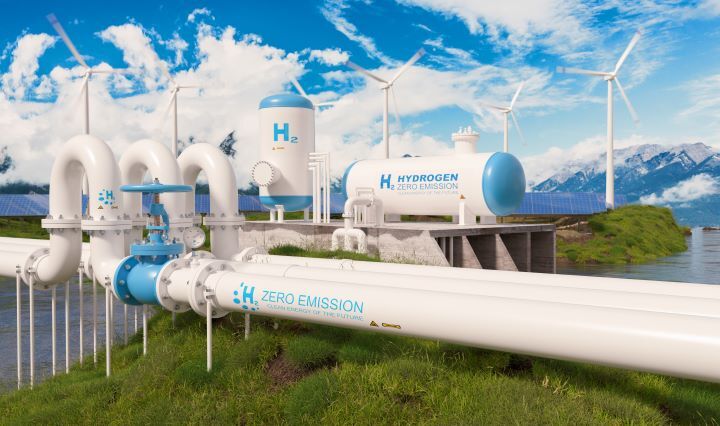
A company operating industrial furnaces sought to transition from natural gas to hydrogen or a hydrogen-natural gas blend. This shift introduced significant challenges around ATEX compliance, hazardous area classification, and the suitability of existing building structures and ventilation systems.

An upper-tier COMAH site had previously submitted a COMAH Safety Report, which was reviewed by HSE technical specialists. One strategic topic under COMAH is functional safety, specifically the Safety Integrity Level (SIL) requirements for safety instrumented systems.

A complex chemical manufacturing site was struggling to identify all of its COMAH (Control of Major Accident Hazards) major accident hazard scenarios. The challenge was compounded by the fact that corporate ownership was based outside the UK, leading to a mismatch between UK regulatory expectations and the company’s internal risk matrix approach. The business needed to demonstrate that all major accident hazards (MAHs) had been identified and that associated risks were reduced to as low as reasonably practicable (ALARP) in line with UK COMAH criteria.

A speciality chemicals company — formerly a COMAH site but now operating below the Major Accident Hazard threshold — had identified concerns about the location of its control room in relation to nearby process hazards. Although a candidate alternative location had been proposed, the site required a formal Occupied Buildings Risk Assessment to evaluate options. Crucially, they needed an approach that was proportionate to the scale of operations and avoided unnecessary complexity.

A client in the Scottish whisky industry operating a lower-tier COMAH site was planning to modernise their manual mixing vat operations by introducing a higher degree of automation. While this promised operational improvements, it raised questions about the Safety Integrity Level (SIL) requirements for the proposed instrumented systems. The challenge was compounded by two key factors: the company lacked internal competence in functional safety, and previous assessments had relied on simplistic LOPA rule sets with excessively high human error rates, which had driven inflated risk scores and unnecessarily high SIL ratings.